A Diagnostic for Your Finances

You don't have an income problem. You have a visibility problem.

Most households earning $100K+ are bleeding $300 to $500 every month on things they can't even name. Not because they're careless. Because nobody taught them to look.

48%
of $100K+ earners live paycheck to paycheck
$427
average monthly waste found by one reader in his first month
24.6%
consumer price increase since 2020

The Invisible Leak

$8K, $10K, $12K a month goes out.
You're not sure where.

You're smart. You went to good schools. You built a real career. But when someone asks "where does your money go?", you change the subject.

That's not a character flaw. It's a visibility gap. And it looks something like this:

None of these are "bad" purchases. That's the problem. They're invisible because each one feels small. Together, they add up to $5,124 a year. Enough for an emergency fund. A real vacation. A year of your kid's college savings.

41%

of people earning $250K to $500K say they live paycheck to paycheck.
Source: 2025 Goldman Sachs Asset Management Retirement Survey

The problem isn't your salary. It's not your discipline. It's that you've never had a clean, honest picture of where the money actually goes. The first step isn't to spend less. It's to see clearly.

Your First Step

The Personal Spending Plan Worksheet

Before you read a single article, this is the tool that changes everything. One page. 30 minutes. A complete picture of where your money actually goes, not where you think it goes.

Personal Spending Plan Worksheet

Not a budget. Not a spreadsheet with 47 categories. A clear, single-page diagnostic that shows you exactly where each dollar goes. Most people who complete it find $200 to $500 in monthly spending they didn't know existed.

Fixed vs. flexible spending, separated clearly
The "invisible" category most tools miss entirely
Space for actual vs. assumed spending
Action items that take 15 minutes, not 15 hours

This worksheet is included free with every membership. Jennifer J. printed hers and stuck it on the fridge. She says it's the first time she and her husband have talked about money without fighting.

From a Reader

$427 a month. Hidden in plain sight.

"
"We found $427 in our monthly budget we didn't know we were wasting. Within 6 months we had our first emergency fund. I can't tell you how much better I sleep."

David T.

David didn't cut Netflix. He didn't stop eating out. He found the spending that wasn't giving him anything in return, the recurring charges that had become background noise. $427 a month, invisible until he looked.

Six months later, he had an emergency fund for the first time. Not from earning more. From seeing more.

The Pattern

HENRY: High Earner, Not Rich Yet

There's a name for this. Financial researchers call it HENRY. You earn well. You look successful. But your net worth tells a different story, because every raise gets absorbed by slightly nicer versions of the same life.

The lease upgrades. The "treats" that became necessities. The Uber Eats that used to be a once-a-week indulgence and is now a Tuesday-through-Saturday habit. Luxuries becoming necessities, so gradually you never noticed the shift.

And here's the worst part: HENRYs must keep their complaints to themselves. You make too much money for anyone to feel sorry for you. So you stay quiet, feeling like something is wrong with you. If I'm smart enough to earn this much, you think, I should be smart enough to manage my own money.

24.6%

consumer price increase from 2020 to 2025. Your salary may have gone up. But so did everything else, often faster than you realized.

This isn't a personal failure. It's a systemic pattern. And it has a fix, but the fix doesn't start with willpower or another budgeting app. It starts with visibility.

The Fix

A Quarterly Financial Diagnostic.
Not Another Budgeting App.

Simple Money Magazine arrives four times a year. Each issue is designed to do one thing: give you a clear, honest view of where you stand financially, and practical steps to move forward.

No ads. No clickbait. No sponsored content telling you which credit card to sign up for. Just well-written, research-backed articles from someone who has spent 15 years helping people rethink their relationship with money and stuff.
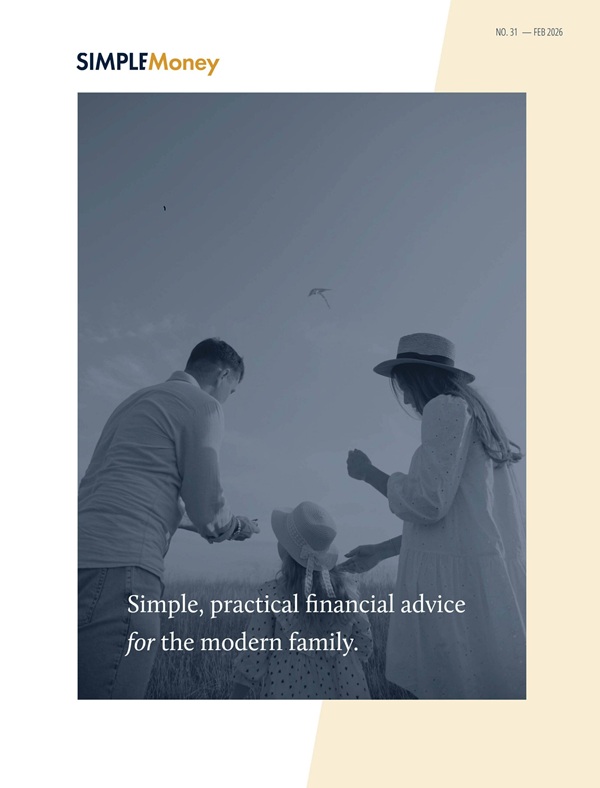
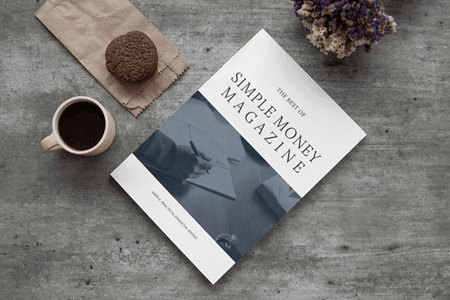
Simple Money Magazine Issue 31 20 Best Essays hardcover book

Issue #31 (current) + all 30 back issues + the hardcover collection of the 20 best essays

Who Writes This

Joshua Becker

Joshua Becker

New York Times bestselling author. Founder of Becoming Minimalist, read by more than 2 million people. Author of 5 books. 31 issues of Simple Money Magazine published and counting.

Joshua doesn't sell courses, coaching packages, or financial products. He writes a magazine, the same way he's been writing online for 15 years: honest, practical, no gimmicks.

He and his wife Kim (who was orphaned at birth) also founded The Hope Effect, a nonprofit changing how the world cares for orphans. Their financial advice comes from the same place their life does: the belief that what you own should serve you, not the other way around.

What's Included

Everything You Get With Lifetime Access

Get Lifetime Access

No subscription. One payment covers every past and future issue.

What Readers Say

Real People, Real Results

"No ads, no clickbait, just solid articles I re-read. I printed the spending plan worksheet and stuck it on my fridge. My husband and I finally talk about money without fighting."

Jennifer J.

"I paid off $8,200 in credit card debt in 9 months using the strategies from Issue 3. I actually cried when I made that final payment."

Michelle M.

"This magazine completely changed how I think about money. I used to feel so much shame about not having savings. Now I have $4,000 in the bank."

Kevin L.

"My wife and I were on the verge of separating because of money stress. The issue on couples and finances literally saved our marriage."

Daniel L.

The Rhythm

Four Issues a Year. Four Financial Check-Ins.

Each quarterly issue is a reset. A chance to look at your numbers, adjust your plan, and make sure nothing has started leaking again.

March
Spring Reset
June
Mid-Year Check
September
Fall Review
December
Year-End Audit

The Shift

From Mystery Drain to Visible Flow

The difference between financial stress and financial confidence isn't a bigger paycheck. It's knowing exactly where the money goes.

Before: The Mystery Drain

  • You earn well but feel broke by the 20th
  • Checking your bank balance makes you anxious
  • "Where did it all go?" is a monthly question
  • Money conversations with your partner turn into fights
  • No emergency fund despite a six-figure income
  • You secretly wonder if something is wrong with you

After: The Visible Flow

  • You know exactly where every dollar goes
  • You check your accounts with calm, not dread
  • Hidden spending has been found and redirected
  • Money talks are productive, not painful
  • An emergency fund that actually exists
  • Confidence that your income is finally working for you

Lifetime Access

One Payment. Every Issue. No Recurring Charges.

No subscription. No auto-renewals. Pay once and get every issue we've ever published, every issue we'll ever publish, and every bonus tool.

Digital Only

$35

one-time payment

  • Issue #31 + all 30 back issues
  • Every future issue, lifetime
  • Personal Spending Plan Worksheet
  • Net Worth Calculator
  • 10-Day Money Reset Email Series
  • 60-day money-back guarantee
Get Digital Access

One-time purchase. Every issue, yours for life.

60

Day Money-Back Guarantee

Read the magazine. Use the Spending Plan Worksheet. Try the strategies. If you don't find them valuable within 60 days, email us and we'll refund every penny. No forms, no hoops, no guilt. The fact that we can offer this should tell you something about how confident we are in what you'll find inside.

Common Questions

Before You Decide

An accountant is great for taxes. But an accountant won't sit with you and help you figure out why $4,000 disappears from your checking account every month with nothing to show for it. That's a visibility problem, not a tax problem. This magazine gives you the tools to see where your money actually goes, and the strategies to redirect it. Start here. Then bring your accountant the clean numbers.
48% of people earning $100K+ live paycheck to paycheck. 41% of people earning $250K to $500K say the same. Earning more doesn't automatically mean keeping more. In fact, higher income often comes with higher invisible spending, because the leaks scale with the lifestyle. This magazine was designed for people who earn well and still feel like something isn't adding up.
Digital. You'll get instant access to read on any device: phone, tablet, laptop. It's designed to be beautiful and readable on screens, like a premium editorial publication. The $50 tier also includes a hardcover book (20 Best Essays) shipped to your door, free worldwide.
It means exactly what it says. You pay once and receive every issue we publish, for as long as we publish them. No recurring charges. No annual renewal. No "lifetime means 3 years" fine print. Joshua has been publishing Becoming Minimalist for over 15 years. This is a long-term project, not a cash grab.
No. It's a one-time payment. We thought it would be a little ironic to help you find hidden recurring charges while putting another one on your credit card. You pay $35 or $50 once. That's it. Nothing recurring, nothing to cancel, nothing to forget about.
There isn't one. Joshua keeps the price low on purpose. The goal is to reach as many people as possible, not to maximize revenue per customer. You get 31 issues (and counting), a hardcover book, three bonus tools, and lifetime access for less than what most people spend on a single forgotten subscription each month. If that sounds too good, consider: David T. found $427/month in hidden spending. The magazine pays for itself in the first hour.
Joshua Becker writes and edits every issue personally. He's a New York Times bestselling author with five published books and a readership of over 2 million people at Becoming Minimalist. He occasionally features guest contributors, but every word goes through him. This is his work, not a content farm.

The money is there.
You just can't see it yet.

You don't need to earn more. You don't need another app. You need to see where the money is actually going, and decide if that's where you want it to go.

$50 / Digital + Book $35 / Digital Only

No subscription. One payment gets you every issue we've published and every one we will. 60-day guarantee.

P.S. If you're earning $100K+ and still feel like you're running on a treadmill, you're not alone. 48% of people in your income bracket feel the same way. The difference between the ones who stay stuck and the ones who break free isn't willpower. It's information. This magazine gives you that information, starting with the Spending Plan Worksheet that has already helped thousands of readers find their invisible leaks.

P.P.S. This is a one-time payment of $35 or $50. No subscription. Nothing recurring. We won't become another line item on the bank statement you're trying to clean up.

P.P.P.S. If it doesn't work for you, email us within 60 days for a full refund. No questions, no friction. Joshua has published 31 issues and runs a nonprofit. He's not in the business of taking money from people who don't find value in his work.